
Generator Start/Stop Control
At a remote tank or pump station with no grid power, every collection is a trip. One producer described what it took to empty an 800-gallon bulk tank before remote control — driving out and pull-starting a gas pump: "it was an hour, hour and a half every time we wanted to collect."
SapSpy can start and stop a generator from your phone over the cellular network, then switch on whatever that generator powers. This guide covers the two generator setups we support, what each one costs you, and the one thing that trips people up.
How it works#
A SapSpy relay module is a remotely controlled switch. For generator control it's wired so that closing the circuit starts the generator and opening it stops it — there's no timed pulse and no separate stop signal. Hold the circuit closed and the generator runs.
That simplicity is possible because both supported setups have a starting system that does the hard part for you: it handles the choke and keeps cranking the starter until the engine catches.
One relay controls the generator. A second relay controls whatever the generator is running — a vacuum pump, a well pump, a motor starter. Keeping them on separate relays is deliberate: you start the generator with no load on it, let it come up to speed, and then switch the load in.
You have two paths, and you pick one or the other:
- Option A — a Westinghouse generator that is ST Smart Switch–ready, using a control cable we sell.
- Option B — a Honda-style generator with an aftermarket two-wire remote start kit from Generator Line, bought direct from them.
Both start and stop from the SapSpy app in exactly the same way. The difference is cost, fuel use, noise and whether you need 240V.
Option A — Westinghouse plus our control cable#
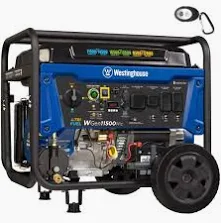
You buy the generator; we sell the cable that connects it to your relay module.
Westinghouse Generator ST Switch Control Cable — $40. It's 3 metres (about 10 feet), plugs into the generator's ST switch port, and terminates on the SapSpy relay module.
Any ST Smart Switch–ready Westinghouse works. The confirmed models are the WGen5300, WGen7500, WGen9500 and WGen12000 — each of which also comes in a DF (dual fuel) version: WGen5300DF, WGen7500DF, WGen9500DF and WGen12000DF.
The DF units run on propane as well as gasoline, which is worth considering for a generator that sits in the woods for weeks between uses.
Why pick Westinghouse: it's the more cost-effective option, and it gives you a 240V output — so a 240V well pump or vacuum pump runs directly off it with no step-up transformer.
The tradeoff: it's a traditional generator. It runs at full speed the whole time it's on, so it burns more fuel and is louder than an inverter unit.
A note on 240V and 120V together#
When a Westinghouse is switched to its 240V selection, the 120V receptacles stop putting out power. If you need both at once, use a NEMA L14-30P to 120V outlet adapter. It isn't a transformer — it plugs into the 30A twist-lock outlet and breaks the two 120V legs already inside it out to standard receptacles.
Option B — Honda plus a Generator Line two-wire kit#
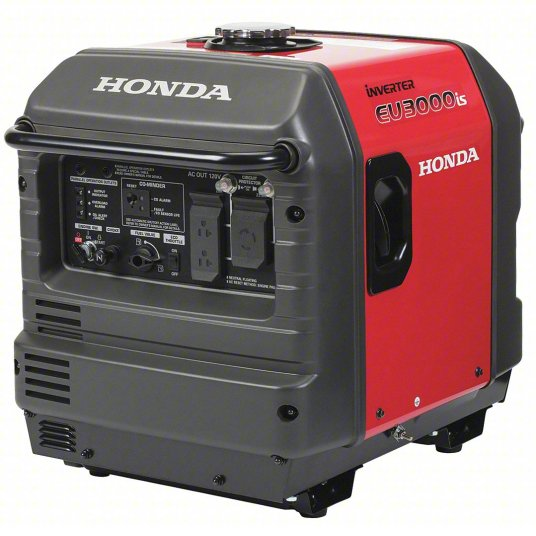
You buy the Honda generator and the two-wire remote start kit directly from Generator Line. We don't sell these kits — the two wires from the kit land on your SapSpy relay module the same way the Westinghouse cable does.
| Kit | Price | Fits |
|---|---|---|
| EU3W2 | $369 | EU3000is / EU30is |
| EU3WS2 (adds a wireless remote) | $429 | EU3000is / EU30is |
| EU65W2 | $269 | EU6500is / EU65is / EM series |
| EU7W2 | $269 | EU7000 / EU70is |
The principle is identical: connect the two wires and the generator starts, separate them and it stops. The kit requires electric start and an automatic choke — on the EU3000is, the kit is what adds the auto-choke the generator doesn't have on its own.
Why pick Honda: it's an inverter generator, so it ramps down when the load is light. That means noticeably less fuel burned and a much quieter machine.
The tradeoff: a real price premium over the comparable Westinghouse, and no 240V.
The video below is an EU3000i running a Generator Line two-wire kit at a remote site — relay one starts the generator, relay two runs the well pump that empties the tank.
What you'll need#
Common to both options:
- A compatible SapSpy relay module, mounted within 10 feet of the generator.
- A second relay if you also want to control a pump or other equipment.
- A motor starter if that pump draws more than 1 HP (see below).
Then either:
- Option A: an ST Smart Switch–ready Westinghouse from the table above, plus our $40 control cable.
- Option B: a supported Honda, plus the matching Generator Line two-wire kit.
Confirming the generator actually started#
Plug your SapSpy device's power cable into an outlet on the generator. That one step buys you three things:
- Is Powered — a button under the device's settings that reports whether external power is present. If the device sees power, the generator is running.
- The device runs on its internal battery while the generator is off, and recharges whenever it runs.
- You can set a text alert for when that power disappears — which tells you the generator stopped, for whatever reason, without you having to go look.
Running a pump off the generator#
The second relay handles the load. How you wire it depends on the size of the motor:
- Under 1 HP: the relay can generally switch the pump directly.
- Over 1 HP: use a motor starter. We sell 3 HP and 5 HP motor starters. Set the starter to Auto and the relay controls it; Manual lets you run it by hand at the panel.
- Already running a VFD? The relay can start that instead. We don't sell VFDs, but they work fine in this role.
If you have a vacuum sensor on the line, you can watch vacuum come up and confirm the pump is genuinely pulling — not just that the relay closed.
Before you walk away from the generator#
Leave the key switch or rocker in the RUN position. Remote start does nothing if the generator is switched off — this is the single most common reason a remote start "doesn't work."
That comes with the one real catch in the whole system: leaving the switch in RUN slowly discharges the generator's own 12V starting battery, by design. Expect roughly five to seven days before it's too flat to crank. Three ways to handle it:
- Fit a small solar trickle charger — the cleanest fix for a generator that lives in the woods.
- Start the generator every few days, which tops the battery back up.
- Switch it off during long stretches when you know you won't need it, and switch it back to RUN on your next visit.
Fuel, oil and the breaker all still need to be right before you leave. Remote start doesn't check any of them.
FAQs
Not today. Anything outside the ST Smart Switch–ready Westinghouse units and the Hondas covered by Generator Line's two-wire kits needs additional engineering, so for now the answer is no. Stay tuned — we're evaluating a key-fob-style approach that would open this up to more generators.
One relay per generator. It handles both start and stop, because the circuit stays closed the whole time the generator runs. You'd add a second relay only to control something the generator powers, like a pump.
Not at this time. Generator control is a manual on/off toggle you tap in the app — there's no automatic trigger from tank level, temperature or an alert.
Plug your SapSpy device's power into an outlet on the generator, then use the Is Powered button under device settings. You can also set a text alert that fires when power drops, which tells you the generator has stopped.
No — that's how the generator works. With the selector on 240V, the 120V receptacles don't output. To get both at the same time, use a NEMA L14-30P adapter on the 30A twist-lock outlet.
Whatever Generator Line supports with their two-wire kits — currently the EU3000is/EU30is, EU6500is/EU65is/EM series, and EU7000/EU70is. Check their two-wire remotes page for the current list before ordering.
Nine times out of ten, the key switch or rocker wasn't left in the RUN position. If it was, check the generator's own 12V starting battery — leaving that switch in RUN drains it over about five to seven days.
Westinghouse costs less and gives you 240V, which matters if you're running a well pump or a 240V vacuum pump. Honda is an inverter: it ramps down under light load, so it's quieter and burns less fuel, at a price premium. Both start and stop from SapSpy exactly the same way.
Within 10 feet. The Westinghouse control cable is 3 metres, which sets the practical limit.
Have a question this doesn't answer? Email info@sapspy.com or call 920-809-4811 — we're producers too.
This website uses cookies that help the website to function. We use these cookies to provide you with improved and customized user-experience. By tapping 'accept,' you consent to the use of cookies. For more info, see our privacy policy.